Sunday, 24 November 2013

Unnatural Creatures


Level: Adult
Genre: Fantasy
Obtained: Borrowed from a friend
Reviewed by: Nic Echo

Cover:
One word: Amazing! This cover is absolutely spectacular! The design, font, colouring, and placement for Unnatural Creatures is practically perfect. It's a mix of the fantastic and a little bit of horror, which sums of this book nicely. As for how well it grabs someone's attention, well, I had at least five people ask what I was reading when I had this out. It's a cover that looks interesting and makes one think what the pages hold.

About the Book:
New York Times bestselling author, Neil Gaiman, has complied several short stories from a variety of authors, all of which write about fantastical creatures of some sort. Some you will know, like a werewolf or a griffin, while others come from the depths of pure imagination. 

Rating: 9/10
What a fantastic read! I remember seeing this in the bookstore, but I ended up deciding against it as it was simply stories chosen by Neil Gaiman (though he did write one of the stories). However, a friend suggested that I read it, and I am bound to purchase my own copy so that I can reread at my leisure. Like many short story collections, Unnatural Creatures is full of marvelous reads, some mediocre, and a few that didn't quite live up to the others in my opinion. Granted, I only found two out of sixteen boring. One was because I found it to be much too predictable nor did the writing save it from its predictableness. The second was boring to me due to the writing style. Don't get me wrong, Yu was an excellent writer, but that doesn't always make an enjoyable piece. Now, I will also be looking into the short stories one by one, but as for the collection as an overall whole: Unnatural Creatures held many wonderful reads that were full of imagination and the unusual. They all easily had a connecting theme. Some were more whimsical while others were more terrifying, but all were fantastical. I certainly would suggest giving it a read.

Inksplot by Gahan Wilson      
What an amazing story! Though I had read something with a similar concept in Stephen King's "The Raft," I found this had something quite unique to it. The basic premise was Archer notices a small black spot on his tablecloth. This spot is not normal as it moves and grows every time you look away from it. Although that is a fun and eerie concept in itself, what really made this story was the illustrations that came with it. You get to see the spot grow and change throughout the pages. "Inksplot" was fantastic, and I would certainly recommend it more if possible (only recently found a title for it that could be pronounced).

The Cartographer Wasps and the Anarchist Bees by E. Lily Yu
No offence to Ms. Yu as she is an excellent writer, but I found this story completely boring. It was like one of those books you read in school where you can see what the author is writing about. However, since the text made your mind so numb that message completely passed you by. She does a lovely job of giving the insects human traits and shows how society can be taken over and its effects on the young. It was just a shame that it bored me to tears.

The Griffin and the Minor Canon by Frank R. Stockton
This was a story that was bot uplifting and sad. Although I wouldn't place it as great, I would still say that it was good. A griffin learns that there is a statue in his likeness in a town so he decides to go down to see it. The villagers are much frightened of him and have the minor canon speak with him. Again, driven by fear, the villagers convince the minor canon to leave and hope the griffin will follow. This does not work out as planned, but I rather not spoil the ending. Although the story may be more quit than many may like, it is still well written with emotion. I really liked the bittersweet ending and the friendship that developed between the griffin and the minor canon. Was it a favourite? No where close, but it still brought a smile to my face.

Ozioma the Wicked by Nnedi Okorafor
This was one of those stories that was just there. That isn't to say that it was awful or tedious. However, it certainly didn't have a lasting impression on me. Truthfully, the only thing I really recall from this is snakes. The main characters is shunned since she is able to talk to them. Someone at the village is attacked by a snake. Ozioma talks to it and later a goddess appears. Nothing much happened. Personally, I wouldn't recommend this one.

Sunbird by Neil Gaiman
I really ended up liking this one (though admittedly I may be a bit of a bias Neil Gaiman fanboy). This group of people have eaten everything, including unicorn meat, so now they are bored with their cuisine. Crowcrustle, one of the members, suggest they try sunbird (aka a phoenix). Gaiman has a way of really making you want to figure out what is up his sleeve (well, he has this effect on me, at least), and he gives you several red herrings. Like Stockton's "The Griffin and the Minor Canon," what brought this read up was the ending (actually that happens a lot in these shorts). The overall read was still quite enjoyable and had a nice trotting pace to it. I would certainly recommend "Sunbird" (though again I am a Gaiman fanboy).

The Sage of Theare by Diana Wynne Jones
Okay, I was really excited for this take as I love love LOVED Diana Wynne Jones' Howl's Moving Castle. "The Sage of Theare" was a bit of a let down. Like Okorafor's "Ozioma the Wicked," I really couldn't remember much from it. Basically, a child is born who will cause the people to question the gods and the gods to fall into chaos. It sounded really interesting, but as I said, it was easily forgettable.

Gabriel-Ernest by Saki (aka H.H. Munro)
This was another one that ended on high on the scale. It's basically just a werewolf story, but Saki is able to put such an unnatural feel to his work. "Gabriel-Ernest" feels wrong and deadly and really it was this tone that made this story so thrilling for me. The ending really brought that tone home, slamming it down with full force. Highly recommended.

The Cockotoucan; or Great-Aunt Willoughby by E. Nesbit
Nesbit certainly ended up writing quite the colourful story. To put it bluntly, it was whimsical. Matilda ends up in a marvelous kingdom, but things change every time the cockotoucan laughs, causing chaos to spread. She must use her new found clever ways to figure out how to set everything right. The story itself was fun, and I could see many people liking it. For me, well, it wasn't a favourite. It was a cute tale and little more, but for those who love a childlike quality in their fantasy, this would be a great story.

Moveable Beast by Maria Dahrana Headley
This was another one of those tales that delved in the dark. The plot itself is simple. Our main character follows a man into the forest, and he is planning on capturing the beast. Really the thrill of this tale is the buildup of the beast, and I would say it pays off. The downfall is that the story isn't as great of a reread than some of the others in this collection. 
  
The Flight of the Horse by Larry Niven
Honestly, I had found "The Flight of the Horse" extremely boring when I had first started it. However, the end really bumped it up so that I was lovingly telling people about this tale. The premise of this story is that it is the future and all the horses are dead. A child of someone with a lot of power sees a pictures of one and wants one so Svete is sent back 1000 years in time to obtain one. As I said, it started out slow, but the ending certainly made it worth the read! Hilarious!

Prismatica by Samuel R. Delaney
 This was probably my favourite story in this collection. "Prismatica" has a very folklore feel to it. Amos gets roped into an adventure with a grey man, who is looking for three mirror shards. Along the way, Amos finds The Prince of the Far Rainbow, who the mirror was originally for. Amos must use his wit to help the prince and get him his prize. Personally, I loved getting to see how Amos and The Prince of the Far Rainbow would figure out the puzzles before them. The grey man's "nearest and dearest friend" was also a lot of fun as all you see is a box and hear several odd noises erupt from it. I certainly was aching to see what was in the box. If you're a fan of the folklore style, you are bound to love this. If not, well, it may end up lower on your preferences.

The Manticore, The Mermaid, and Me by Megan Kurashige
This was the other story that I felt just wasn't all that great. Where "The Cartographer Wasps and the Anarchists Bees" was well written yet dull by my standards, "The Manticore, The Mermaid, and Me" just seemed lack luster nonly or extremely inventive. In this story, the main character and Matthew, her good friend, end up at a museum where one of the caretakers creates chimera type creatures. The story has the creatures come to life, and although I won't ruin the ending, everything was very predictable. Granted, you can have a fun story even if the plot outcome is as clear as day. However, the writing in this didn't elevate the work, leaving us with something quite mediocre.

The Compleat Werewolf by Anthony Boucher (aka William Anthony Parker White) (aka H. H. Holmes)
First, the downfall: it's a pretty generic werewolf story. Sure there are a few differences such as Wolf has control in his candid form, and small things were changed so that I wasn't looking at the same cookie cutter shape. However, it still felt generic to me. The story is as follows: Professor Wolfe Wolf  is upset as Gloria turned down his proposal as he wasn't an actor or a G-man, something exciting. Well, one day Wolfe meets Ozzy, who tells Wolf that he is a werewolf. Wolfe decides to use his newfound gift to try to win back Gloria. "The Compleat Werewolf" certainly had aspects that made it different, such as how one transforms and how to tell if one is a werewolf. I also really enjoyed the last paragraph (it made me smile). The story overall was a little too bland for my tastes however.

The Smile on the Face by Nalo Hopkinson
Althought the plot itself was interesting, I really felt what made this stand out was how well Hopkinson was able to portray teenagers. It's not an easy thing to do. Gilla is a teenage girl who ends up swallowing a seed. Afterwards, she starts thinking thoughts that aren't like her at all, and things only become more odd in the end. As I said, the fantasy aspect was certainly fun, and I really liked that something so simple could change our thoughts so severely. However, as stated, it really was the portrayal of being a teenager that went over so well. Hopkinson nailed it on how cruel teenagers can be for those who hit puberty early on or happen to be bigger. A wonderful read.

Or All the Seas with Oysters by Avram Davidson
Like many of these wonderful tales, "Or All the Seas with Oysters" is another fun read. The concept is simple but one that brings forth both a smile to your face and a tremor in your heart. "Or All the Seas with Oysters" deals with how some animals look like objects in nature, but it brings it to the city. It's why your safety pins go missing and your hangers somehow multiply. A very fun read that is easy to expand on in one's imagination.

Come Lady Death by Peter S. Beagle
This was one of those tales where you could easily see the way it would unfold. However, Peter S. Beagle manages to pen a beautiful tale. Of course, this might just be my love for the 18th century talking. The plot for the story is Lady Neville is known for throwing the best parties, and this time she plans on inviting Death. What made me love this story was Lady Neville's idea of Death and how Death must live in London with the other aristocrats as that is where all the important people are. It's just so brilliant! Really what makes this a fantastic read is the characters in "Come Lady Death." You have the poet with a mixture of fear and fascination, a lady who is completely terrified, and a gentleman who remains frightened yet courtly. Beagle really manages to capture the times and like many of these short stories, I would recommend this one as well.                        

Wednesday, 13 November 2013

Film vs Book: The Hunger Games


 I remember being so excited for The Hunger Games to be released, for several reasons. One of those, of course, is simply getting to see a much loved book making it to the big screen. The other major reason that I was excited was that my friend may be able to share in the emotions with me. Sadly, that was not the case. Now, I would not say that the film version was bad; however, it failed to capture the emotion that the book held. The odd thing is that I cannot exactly say what would have made the film better. I mean, it captured everything that needed to happen. And half of the movie  focused on Katniss's life and the Capitol, much like the book, but there was something about it that felt rushed.Where I cared so much about the characters in the book, I found myself bored with them in the film. Everything was just slightly off -- the music (or lack thereof) wasn't quite right, the acting just a touch wooden (though it made sense for the characters to have their emotions in check, and the actors were not poor by any means). Maybe if they had extended the movie for even another half hour, it might have let the viewer live and feel with the characters a bit more.

Once again, I would like to point out that this film was in no way a bad adaptation. In fact, it has several factors that worked very well for the movie. The first of these was the Capitol. The film did a wonderful job at bringing the vibrant fashion and high class living to life. Effie was an especially excellent treat, and I found myself enjoying her character much more in the film (That is mahogany!). There were other not so likeable characters that made a much stronger impact on the silver screen as well. The main one that comes to mind is President Snow, who barely makes an appearance in the book. In the film however, he is the one creating tension and brings forth that strong sense of wrongness as he talks about using hope as a weapon. Then, there is his message to the gamemaker at the end of the film. I won't mention what it is just in case someone hasn't seen the film, bit it has an amazing impact. It had one of those impacts that stayed with me since the movie's opening day. 

Still even with its great moments, the film could have definitely amped up in some of the other areas. The main one that always comes to mind is when Katniss is stung by the tracker jackers and starts hallucinating. In the book, this is quite terrifying as she starts to see green puss leaking from the stings, orange blobs that take over, and then ants start crawling out of her wounds and eyes. The last bit is extremely unnerving! The film... Well, it certainly makes it known that Katniss is hallucinating, and it has an enjoyable bit where Caesar turns up -- quite the chuckle and lets you be very aware of her state of mind. The scene itself wasn't bad, but it didn't have quite the impact that was possible. I felt it should have been more terrifying and certainly a lot more surreal. The other huge part in the film that really missed its mark was the climax. Near the end of the Hunger Games, a series of mutts, or genetically engineered creatures, are sent after the remaining players. In the film, the mutts are cool looking, but overall they are just neat dog like beasts that chase after our heroes. The book, however, has them bred with the players that had been killed off. The beckon the other humans like a human would, and the eyes are still human. That just adds another level to how messed up the Capitol is. The book also prolongs the pain Cato goes through when he is taken down by the mutts. Yes, you get the screaming agony in the film; however his death doesn't feel nearly as awful as the novel. I was extremely disappointed with the film's climax. Everything else was more minor, such as I didn't feel Haymitch was slovenly enough to start out. He was still an enjoyable character though.

As per usual, the book holds up better than the movie. Yes, the movie followed the book, but it lacked the emotion that the book brings out. A lot of this is probably due to all the information that needed to be given, but it was too rushed and too emotionless throughout most of the film. I wouldn't say it's a movie to stay away from, but I wouldn't say it's worth shelling out money for either. Stick to the book.

Friday, 25 October 2013

The Left Hand of Darkness


Level: Adult
Genre: SciFi
Obtained: Borrowed from a friend
Reviewed by: Nic Echo
 
Cover:
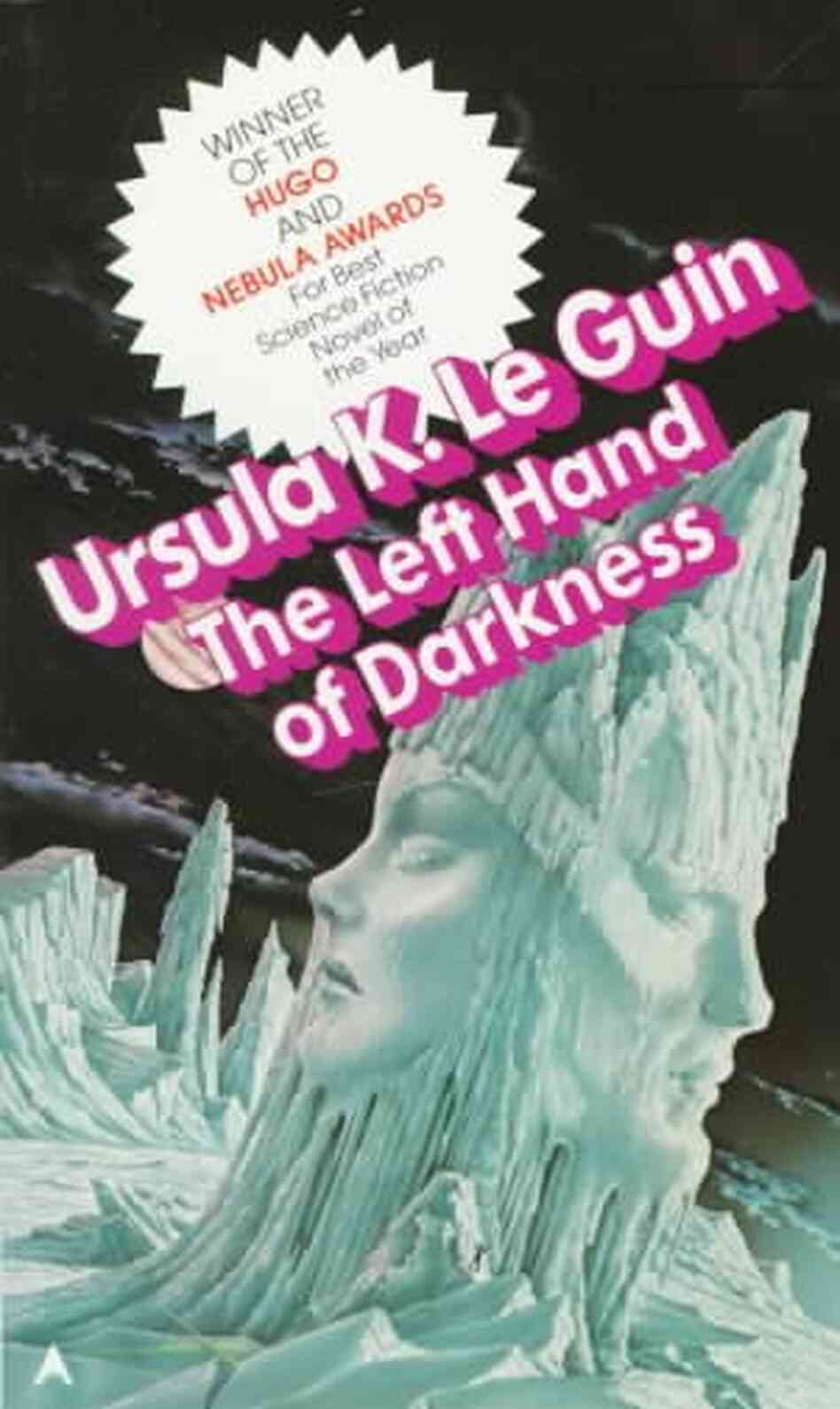
Okay, I have to admit that this cover would not draw me in; however, it goes very well with the book. Sure the lettering is a little dated, but the art chosen is perfect. The icy terrain depicts the actual landscape of the world wile the ice sculpture shows the nature of the world's inhabitants, both male and female, one and the same. Beautifully done. 
 
About the Book:
Genly Ai is an envoy from another world, hoping to become allies with the residents of Winter. It certainly proves more difficult than anticipated though. Genly has to deal with both politics and deciding whom he is able to trust, and his decisions only go from difficult to more difficult.
 
Rating: 9/10
I was originally suggested this book for the Winter residents, whom are neither male nor female and only become a sex when they enter kemmer, or their mating period. For those who are constantly one sex, they are called perverts. It seemed as if it would be an entertaining commentary on sex, gender, and society's view of it. I will admit that I was disappointed in that aspect as the story didn't really focus on that. However, that isn't to say that the story was any less interesting. I really enjoyed getting to witness Genly's struggles as he tried to figure out how to best go about his mission, but I really became invested once our protagonist is arrested. It becomes dark and desperate, and Le Guin is able to unfold a heartfelt friendship that allows Genly to view the Winter inhabitants as human instead of alien. Perhaps a little cliche, but Le Guin portrays the journey so well that it strikes at the emotions and shows the wear and tear on Genly's soul. She also brings forth elements of patriotism and trust and where does one draw the line.
 
To be honest, there was really only one thing that brought this down for me, and that was the terminology and layout. There were a lot of words that I had trouble comprehending (some I never fully understood). I also had a hard time figuring out what towns and countries were where. Not everyone will have this issue, but it constantly brought the story to a halt for me. Perhaps it would have been easier on my mind if I had read the entire series instead of just The Left Hand of Darkness. Maybe some of the other books explain the world of Winter a little better.
 
Overall though, I would say that The Left Hand of Darkness is an excellent novel that deals with several layers. It can be a little slow as Le Guin gives us needed information, but she is able to weave such treachery, fear, and friendship. I would certainly recommend this to many.
 
What I'm Reading Next:
To be decided really. I am going to be rereading The Hunger Games and Catching Fire to do some book vs. film reviews so I'll see what comes up after that. More than likely:
          

Tuesday, 15 October 2013

Obsidian Butterfly


Level: Explicit
Genre: Fantasy> Urban Fantasy > Vampire
Obtained: Purchased at Border's
Reviewed by: Nic Echo
 
Cover:
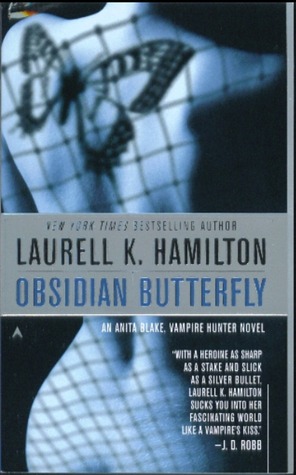
 Okay, I really like this cover. It is honestly one of my favourite covers. Just everything about it works so well: the cropping, the soft blues and silvers, and the shadows. It is a very sensual cover though I wouldn't say this is one of the sensual Anita Blake novels. Still, it really draws you in. The use of the butterfly is also very well done as that was something that could have easily looked too fake. Mostly, it is the mixture of shadows and that soft blue light though. The silver title bar and silver edge also help make it more, making the blue more silver in a way, making me think of moonlight. The biggest downfall, as I said, is that Obsidian Butterfly is not a sensual book so the cover does that no justice.
 
About the Book:
Edward is a sociopathic assassin that hunts the paranormal, and he is ready to call Anita in for a favour. Anita then finds herself in Albuquerque. New  Mexico, looking at a series of mutilations. Is it the cause of the Master of the City, Itzpapalotl, or something else entirely? Either way, Anita knows she is deeper than she has ever been.
 
Rating: 9/10
Where Laurell K. Hamilton's last three books took a downturn, Obsidian Butterfly shoots up. Obsidian Butterfly is action packed and full of the creepy and grotesque. Hamilton is able to meld her storylines together quite well (though not perfectly. See: Officer Marks), and although Anita is states away, Hamilton is able to keep Jean-Claude and Richard fresh in the reader's mind, without it being obnoxious and out of place.
 
One of the great things about Obsidian Butterfly is the tone of the books. If you found yourself loving the early Anita Blake, you are bound to love Obsidian Butterfly as well. It has the darkness and edge to it, complete with sarcasm (and a lot more explosions and gunfights). LKH also does a decent job of bringing in a New Mexico atmosphere to the book. What's more is that there is less repetition in Obsidian Butterfly than in the past books. Laurell's writing skill has certainly evolved. Of course, one of the things that also made the book great was learning more about the mysterious Edward. Not only do we get to see Edward the Assassin, but we get to see his alternate persona, Ted, and we also get to see him as family man while getting more hints of his past and how he became who he was. Hamilton also introduces a new character who has quite the potential to be an awesomely creepy person. This would be Olaf, the misogynistic serial killer. It's just a shame Ms. Hamilton did so little with him character wise. Still, he was fun in this book.
 
Like many of Hamilton's other novels, Obsidian Butterfly still manages to fall short. It seems everyone has some sort of fascination with Anita, and Edward certainly shows favouritism. Still, it is easy enough to see why he may be invested (I personally see him viewing as some sort of science project). As for the others, well, it's not so bad that you can't look past it yet bad enough to not completely forget.
 
Overall, Obsidian Butterfly was a very enjoyable read. Hamilton managed to fix many of her problems (well, made progress) so that it was a smoother read. The action and Edward also managed to keep me turning the page. The sexual moments slowed the book down some, but not enough to make it lose a star, in my opinion. I would definitely say check it out, especially if you were a fan of the early early Anita Blake. If you found yourself not liking The Killing Dance, Burnt Offerings, and/or Blue Moon, don't worry. Obsidian Butterfly knocks them away. It's just a shame the rest of the series failed (look forward to Anita Blake snark come New Year).
 
What I'm Reading Next:


Friday, 27 September 2013

Blue Moon


Level: Explicit
Genre: Fantasy> Urban Fantasy > Vampire
Obtained: Purchased at Border's
Reviewed by: Nic Echo

Cover:
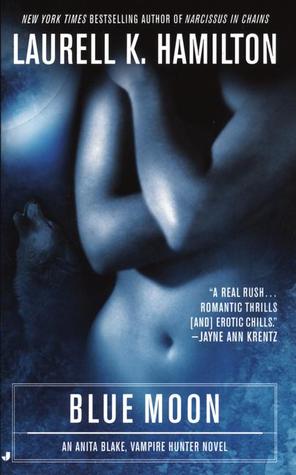
I've never been sure how I have felt about this cover. I certainly never found it awful, and the artwork and placement is nice. I even love the colour blue. However, I think what turns me off about it is that it is uninspired. As cliche as it is, I do understand choosing the colour blue for this. It turns people off if you have a colour in your title and your cover doesn't match it. Still the fact that they added a wolf and a moon in the cover just ... really? There was nothing else you could do? On the other hand, it does let the reader know that this is going to be a book that focuses a lot on the werewolves so that is the good. The unoriginality just makes it fall flat for me though.

About the Book:
Anita ends up getting a call that Richard is in jail. The problem is that he is a werewolf and a full moon is coming up. Of course, once there other problems arise. The Tennessee werewolf pack has its politics to dance around, and then there is Colin, the Master of the City, who believes that Jean-Claude is now trying to take over his territory. Add a few mutilated bodies and well... no one said Anita didn't have unusual problems.

Rating: 7/10
So many pointless politics. Okay, before I start, let me say that I usually enjoy reading about political manipulation. However, politics are not Hamilton's forte so when we do get them, they often feel trite. In fact, we get a lot of sexual situations and blood. Now, I will say that it makes sense to a point, bit when most of your book is little more than that, it starts to drag. Blue Moon ends up having a lot of scenes so that Anita can appear tough, sexy, and cool. I won't say it is as bad as the later books, but it is still pretty apparent.

"Well, Nic, you seemed to really dislike this book." Actually, no. Will it ever be a favourite? Will I ever highly recommend it? Not likely. Yet the story itself was quite entertaining. Yes, the "sexy", "dark", and "edgy" scenes dragged, but when Hamilton focused more on the story, I really wanted to keep reading. Sadly, most of this was in the last quarter of the book, but it was entertaining enough to warrant another point. Colin's attack and fear of Anita helped to created some tense situations also (I say some since after a while, they also started to drag). However, I would say the thing that upped the rating score the most was the demon. I'm sorry, but it was pretty cool. I really enjoyed how it started out half formed, and even when it had become fully formed, it had an otherworldlyness about it. Personally, I would have liked to have seen the demon do even more damage, but it was still fun.

Sadly, there was still a lot I disliked about Blue Moon. Like I mentioned, there were too many "politics" and look how tough Anita is scenes. Luckily, the tones of the book made it much easier to swallow except the rape/chase/sex scene. So there is a scene where Raina, the last werewolf queen, takes over Anita and sets something off so that all the male wolves want to sleep with her. Anita manages to make it back to her cabin, and soon after Richard gets there. Although Richard does ask and Anita does say yes, it is still very sketchy as she is very on edge with "hormones," and well, the only way to end the chase is to sleep with someone. Yeah... Okay so that may not bother everyone as Anita and Richard are both in love and in lust with each other, but the sex scene itself was just laughable. Seriously, I was giggling aloud at some of the phrases used, especially from "edgy" author Laurell K. Hamilton, who goes on and on about how daring she is with sex. So what sort of phrases came up during this "arousing" scene? "He kissed me there like he kissed my mouth, all tongue and exploring," or my favourite orgasm ever: "He pulled me into his mouth until the warmth spread from my groin upward in a golden rush that left the world hazy and edged with white guaze like I was seeing through a mist." Now, I am not one of those people who like excessive use of the word penis, dick, cunt, and pussy, but Hamilton can't even bring herself to use the word member. She used there for the vagina/clit for god's sake.  What's more is we don't even get a great mood for the scene like we did with Jean-Claude. Well, I guess all the sexual tension between Anita and Richard helped some, but Hamilton's writing certainly did not.

Okay, okay, maybe I am getting into it too much, especially since the sex scene is only a small part of the overall novel. Still, Blue Moon was definitely not without its faults, causing it to drag in many places. However, the tones and the ending certainly saved it and made it fairly enjoyable. It is middle of the road but still fun. Again, if you liked the other Anita Blake books, I would still suggest checking this one out.

What I'm Reading Next:
        

Wednesday, 25 September 2013

Burnt Offerings


Level: Explicit
Genre: Fantasy> Urban Fantasy > Vampire
Obtained: Purchased at Border's
Reviewed by: Nic Echo

Cover:
I actually like this cover and think it works well for the book. Not only does this draw your eye, but it has a sort of poster feel. There is also an obvious sexuality to it, which again works really well with the book's content. The one major issue with this cover is the woman's stomach is so hidden in shadow that it looks as if it isn't there most of the time so you are left with an illusion of a pair of chopped off legs in the flames. I mean, look at the German cover below. It is basically the same cover except the colours are brighter, not as close of a crop, and the torso isn't so shadowed. While I do like the colours of the US paperback more, the shadows in the German one work much better since it looks more like a body than just random legs.
  
About the Book:
Anita has always led something of a dangerous life, but now the danger has hit a new level when The Vampire Council comes to call. They are accusing Jean-Claude of trying to start a new council in America, but even if Jean-Claude convinces them otherwise, The Council will be wanting their payment of blood and sex.

Rating: 6/10
 Burnt Offerings has many of the same downfalls that The Killing Dance had, mainly the repetition. The enjoyment of the plot is able to make it more bearable, but the repetitiveness is still pretty in your face. The good news is that there is a lot less focus on the metaphysical abilities (though this may be a downfall to those new to the series). However, the sex, rape, and torture are at an all time high. Now, when I first read this, I hadn't minded, but I was also in high school then and although the Anita Blake books did feature a lot of rape and torture, they weren't in the spotlight as often as the later books where it seems every person is obsessed with sex and violence. Now, that isn't to say that there aren't some terrifying and gruesome things that The Council does, such as skinning the back off of someone or breaking bones through the skin of the legs. Still, the sex and pain went on much too long.

Honestly, there were two things that made this book slightly better in my mind: Asher and Warrick. Warrick has been one of those characters that have stayed in my mind for years even though he was only featured in one book. Part of it is his love for God, but we have seen that plenty of times before. No, the thing that made me remember him is when we see his animal to call, and he is so thrilled even though his animal to call is butterflies. Yes, precious, beautiful, delicate butterflies. I adore this touch that Hamilton brought. It is such a simple thing but managed to bring so much to a character, and speaking of characters, let us talk about Asher. This was the Asher that I had fallen in love with. He was snarky, emotional, and dramatic without being whiny just so we could have some "tension." Here I could feel his anger and loss, feel the weight of being mistreated for centuries. Sadly, there was still one major issue I had involving Asher. At the end of the book, Jean-Claude and the others have to pay prices to The Council. For Anita, she is required to let Asher take blood. She ends up "seducing" Asher out of it by touching and caressing his scars, and he ends up so moved that he cannot bear to harm her, even though he had been planning on killing her for a long while now. Anita is just that awesome. Can I get some more eye rolls, please? Yeah... Oh, and JC and co. manage to get out of every one of The Council's demands as well. The really nefarious ones I am okay with (such as Yvette wanting to rot on Jason), but every single one? Ugh.

Anyway, Burnt Offerings had a lot of issues yet it was still fairly enjoyable. It had a lot of the sarcastic feel the earlier books had, but the issues mentioned really bring this down and are likely to put many off. Still, several of the characters managed to up it a bit more, and it still remained fast paced and gruesome. It is no where near as a bad as the later books, but it still fails to hold that certain darkness the early books did. I would still recommend it if you liked the Anita Blake books so far, but it may also be a stopping point for many.

What I'm Reading Next:


Tuesday, 17 September 2013

Dancing


Level: Explicit
Genre: Fantasy> Urban Fantasy > Vampire
Obtained: Amazon Kindle
Reviewed by: Maggie W.

Cover:

The person on this cover seems to be peeking out from where they've been buried alive. Fitting since this book is an attempt by the author to climb out of the hole she dug herself into with the previous crappy books her series has turned into. The first thing I noticed about this cover art when it was released was, that it the ugliest color of orange for the author and title, and it doesn't look any better next to the purple and blue. Based on only the cover this gets a D if only because it wasn't one of the random objects we found in a box covers.


About the Book:


I would have let Nic continue with his on going reviews of the books in the Anita Blake: Vampire Hunter series but this book was literally so terrible that I felt I had to post the review I wrote on Amazon here. Never in my life have I read a book so terrible that my ability to spell and make complete sentences afterwards left me for over an hour. Even now 2 hours later as I write this, I have to rewrite words repeatedly. 


Rating: 2/10


This book only earned a point for each of the following reasons: 

1) There were no horribly written boring sex scenes.
2) It was only novella length and I wasn't forced to suffer through the usual 500 pages of this swill. 

I don't even know where to start on how terrible this novella was. Once I got going I didn't know when to stop.


First were the endless paragraphs describing what characters looked like that were nearly identical to every other description of them we've gotten since they were introduced in the series. We get it, Nathaniel has long, long hair and lavender eyes, Micah is short with curly hair and a triangle face. Make a character list with a 1-2 sentence description of each one to put at the end of each book, problem solved in case people haven't read any other books in the series.

Then is the fact that because Monica is out of town for a week at a conference, she's left Matthew with Jean-Claude, Anita and company. Why would you leave your child in the care of someone that can't even remember to eat so as not to have ardeur problems while investigating murders? Not to mention, why is it appropriate to talk about the fact that you(Nathaniel) met Anita after nearly being killed by a trick and that you spent years trying to get in her pants in front of a 4 year old?
"we'd started doing less of the tonsil-cleaning kisses in front of Matthew--not just between the men, but between me and the men, or anyone and anyone. Why? Because Matthew liked to imitate"
So it never occurred to them about what is appropriate in front of children until Matthew started to imitate them? O.o Really? They didn't get that maybe 4 year olds shouldn't see you shove your tongue down multiple someone's throats until he tried the same? I think that's one of those things on the list with, don't swear in front of them, or expose them to violence until they're mentally equipped to handle it. Then again, if you're leaving a child with Anita they'd probably see all 3 and more within the first 15 minutes.

I noticed something while reading this, Zerbrowski has been a character since Guilty Pleasures. He was a character I enjoyed reading. When Anita and sundry get to the house, even his wife Katie is calling him Zerbrowski. I thought, hey, they've been married for 20 years, that's a little strange. So I googled and realized, we've never heard his first name. We've got nicknames for characters that get killed off a book or 2 after their introduction(sometimes in the same book) but a character that's been there since book one doesn't have a full name. Or maybe he's just Zerbrowski, like Cher or Madonna.

"It took us almost thirty minutes of conversation to try and explain that Matthew wasn't ours, but he spent a lot of time with us." Why would that take 30 minutes? All that needs to be said is, that's Matthew, our friend's son, we're watching him while she's out of town. Even if you're the slowest speaker in the world it would take maybe 1 minute tops to explain. Of course it's the wives that can't understand this quickly, because what's an Anita Blake story without some sexism thrown in for flavor. And of course we can add a bit of Anita getting angry over other women finding Nathaniel attractive and they only back off when they find out Nathaniel is taken because boring vanilla cardboard cutout wives can't resist him.

If working as a stripper gives Nathaniel so much angst about not being seen as a person then why continue to do the job? I mean as much as he and Anita both go on about him being the wife, why not be the stay at home partner full-time? He could just teach dance part-time.

"In that cold, wicked witch of the north sort of way," Nit-picking but the witch of the north was Glinda, the good witch.

The last 1/3 of the book I just rolled my eyes through. More meanies being mean about Anita and Co.'s lifestyle, even bringing Matthew into it by having another child start a fight about it and at one point a little boy kicks a girl in the head, because fuck her, that's why. Apparently dance is only for gay boys. Que Nathaniel getting everyone to dance ballet, even the mean little boys that only play baseball or do martial arts. Everything ends with pages of Nathaniel dancing with all the children, then children dancing with children, then adults dancing while talking about dancing. I wanted it to end and have no desire to dance for a while.

Someone please get me a drink, I need it.


What I'm reading next:

Literally whatever will erase this terrible, terrible book from my brain.